Sharing Nature’s Garden

Beautiful blooms in the early spring garden…
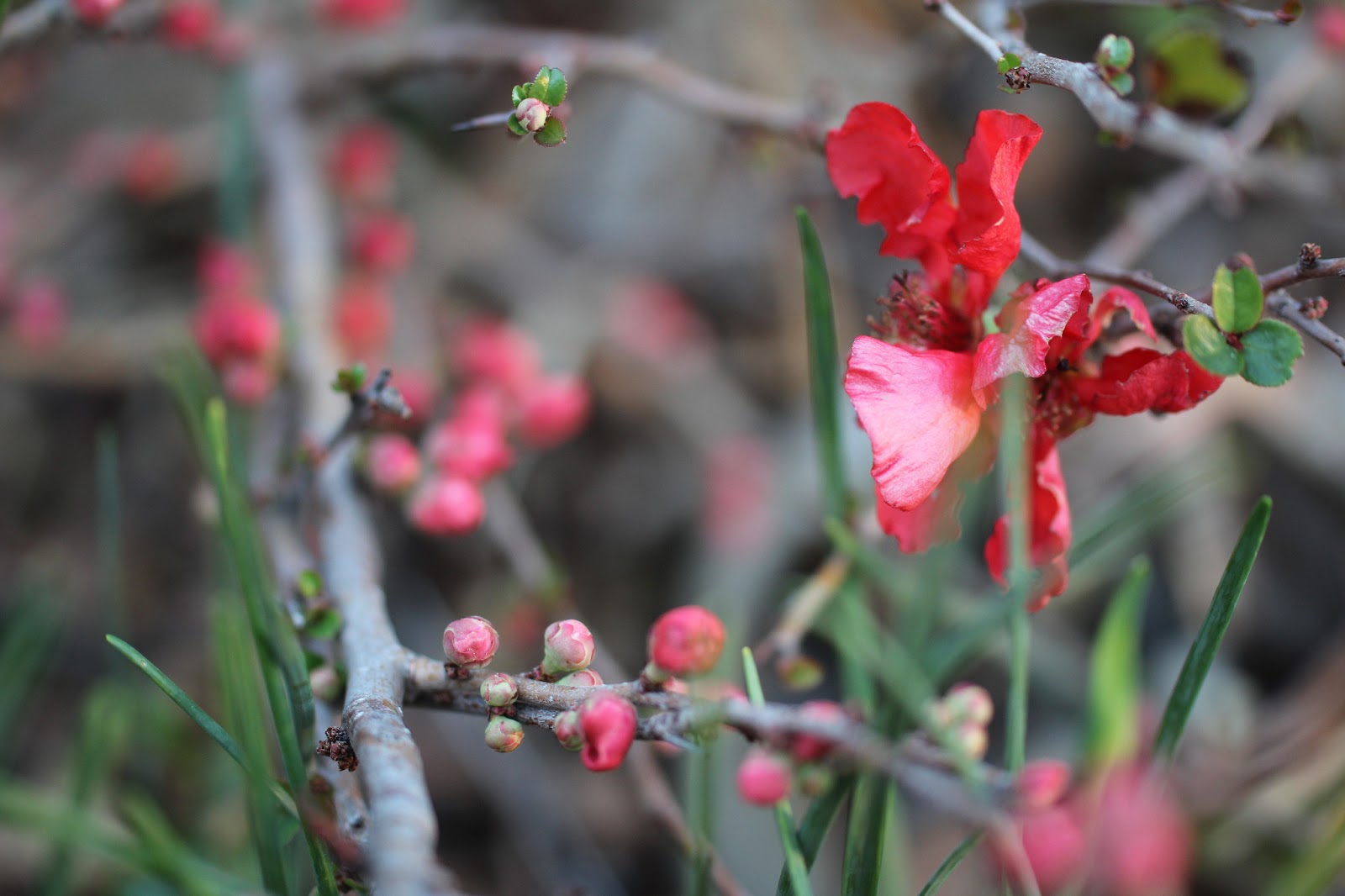
Even though we officially have to practice 45 more days of gardening patience until we reach spring, Central Texas seems to be unaware that it’s winter.

We’ve had a two or three freezes at our house – barely – but it’s been a warm, dry winter.

And last week we were in the 80s, breaking a winter high record at 81.

But the garden perseveres and plants know what day it really is.

Reliable like clockwork, my Japanese quince (Chaenomeles japonica) is the first harbinger of spring in my landscape.  Dotted with compact pink buds and a few blooms that have already freed themselves, it’s a pop of brilliant color in a subdued and mostly dormant garden.

What’s exciting you in your garden today?
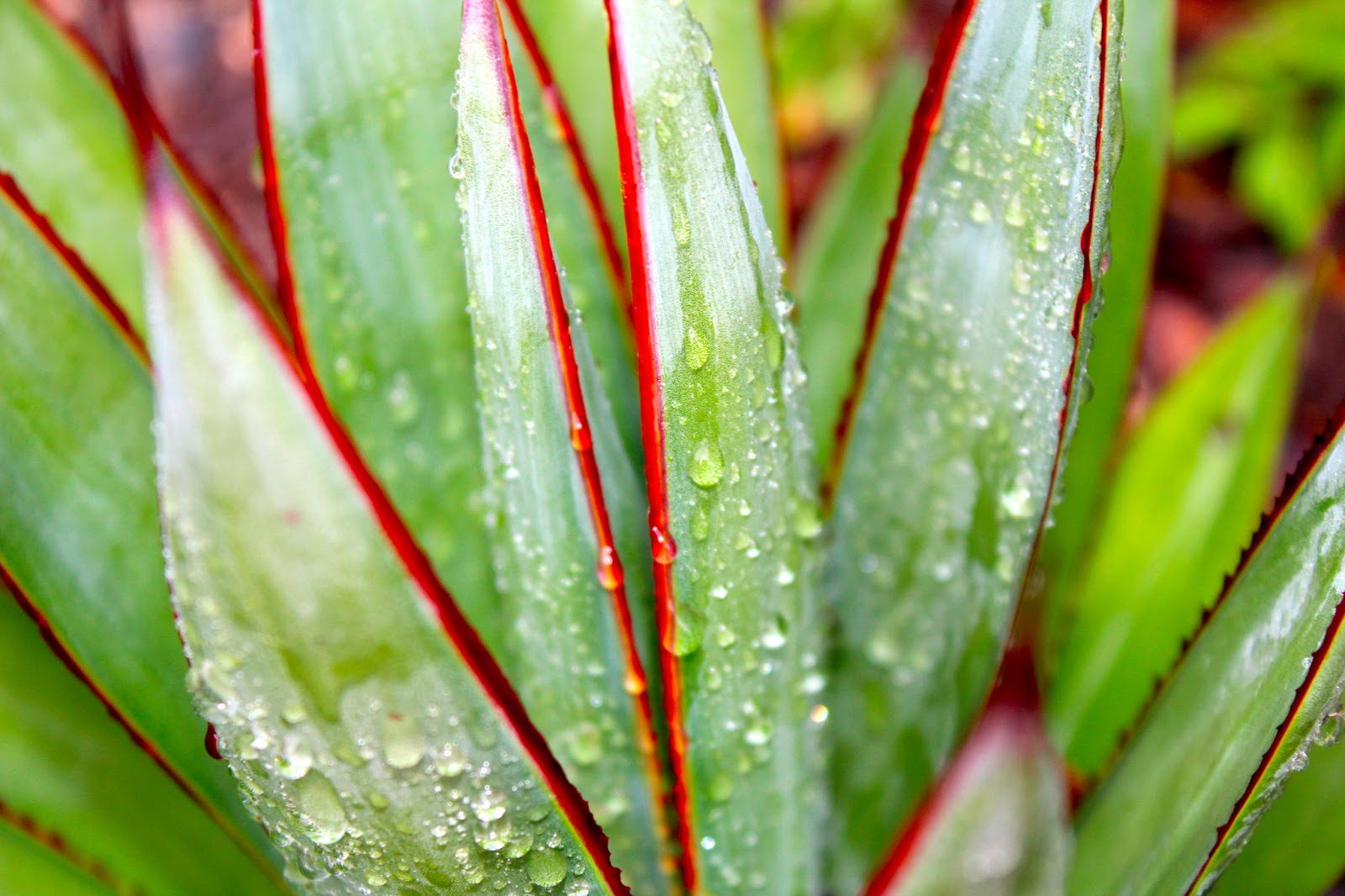

A little rain to help our drought-stricken gardens…

The drought continues in Central Texas — we closed the door on 2012 more than an inch below our average 4th quarter rainfall totals.

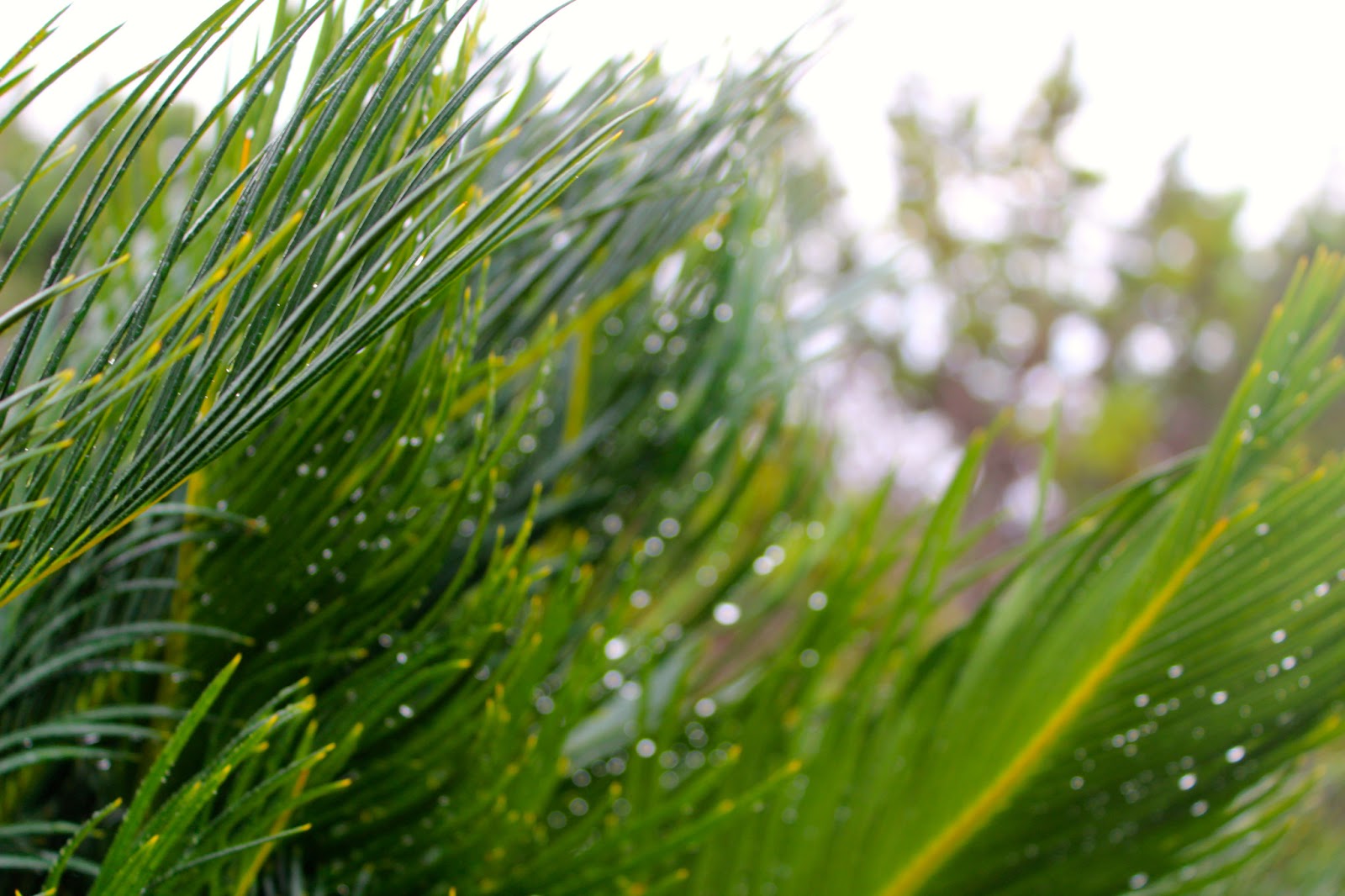
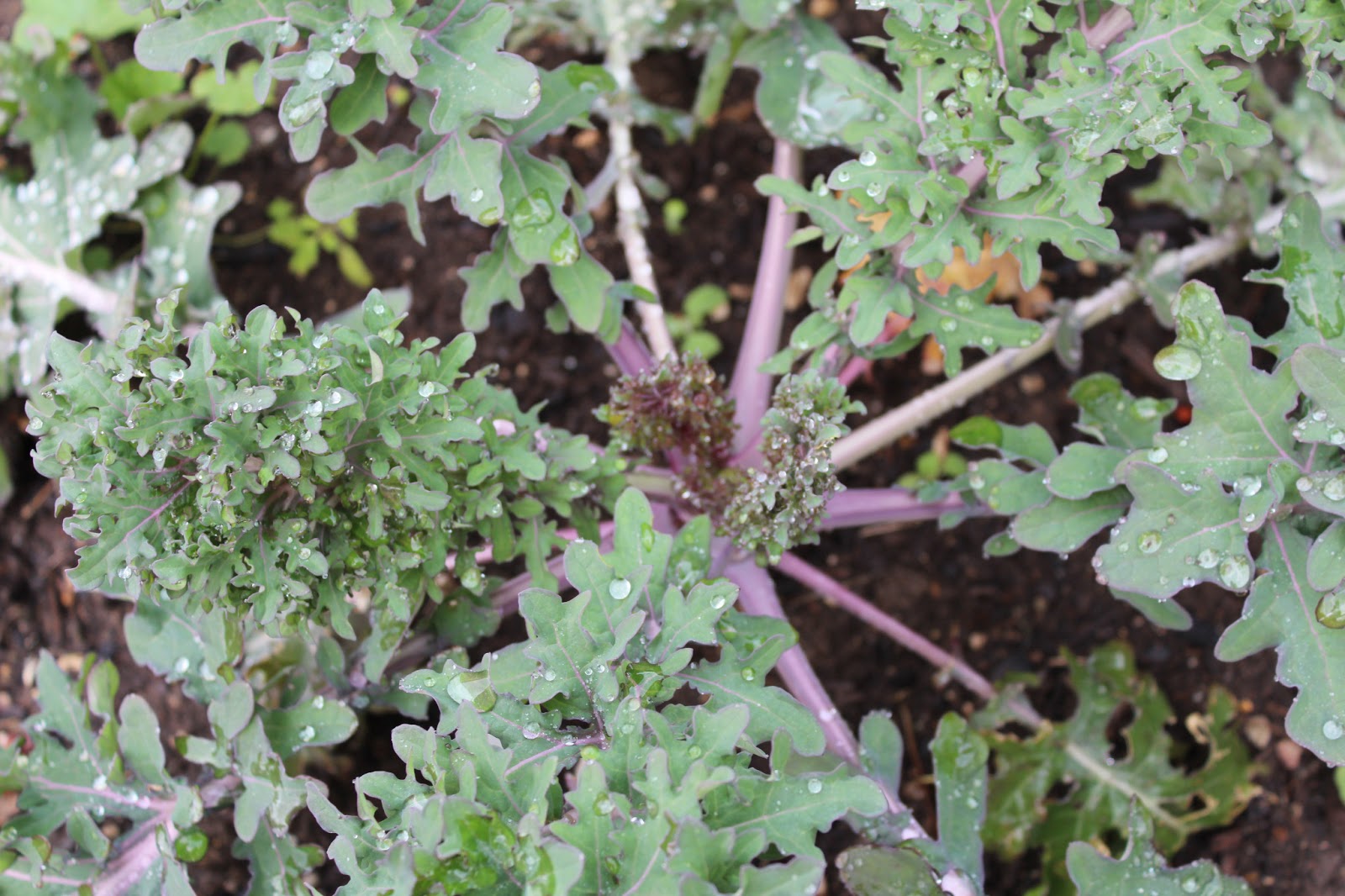
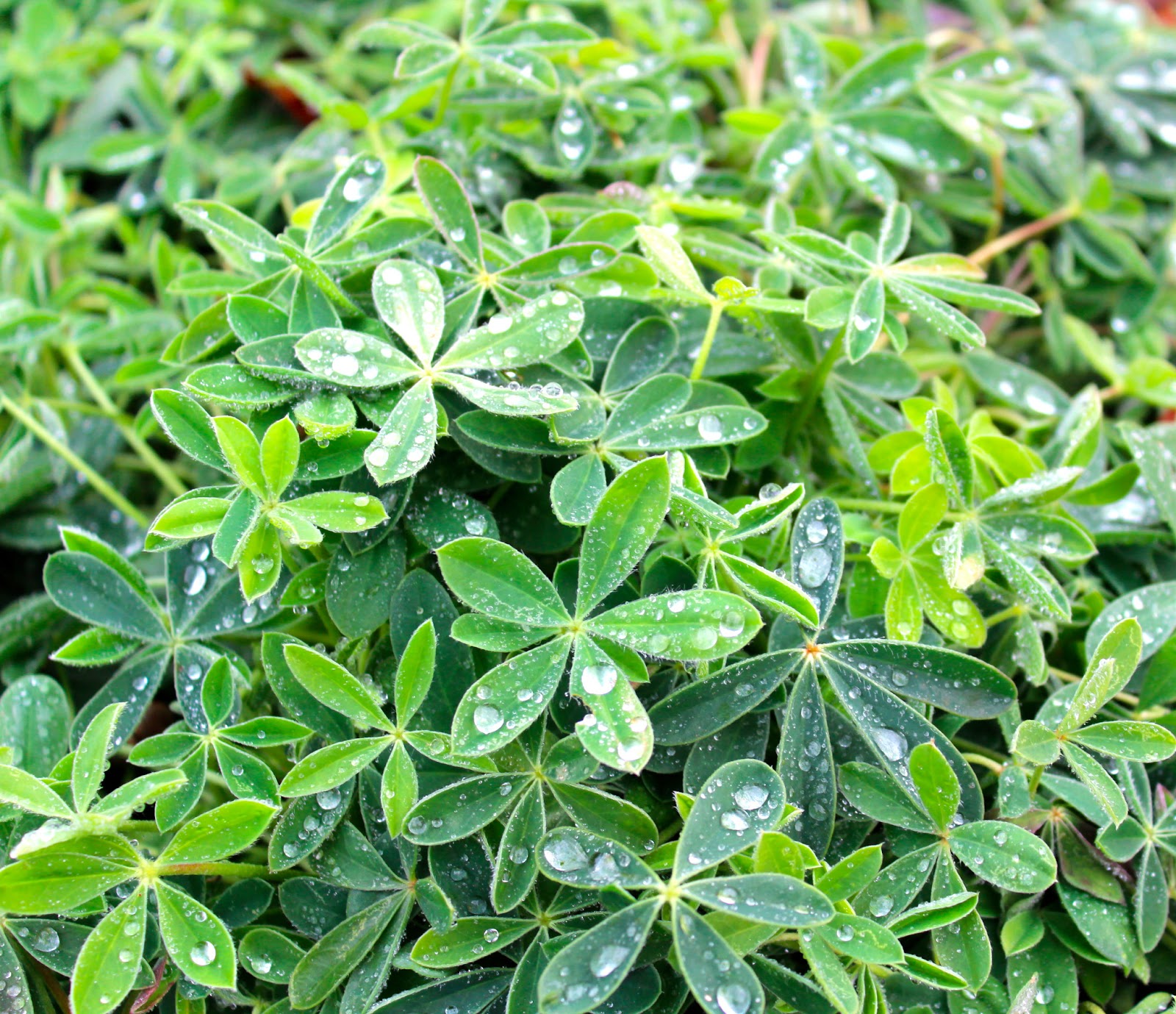
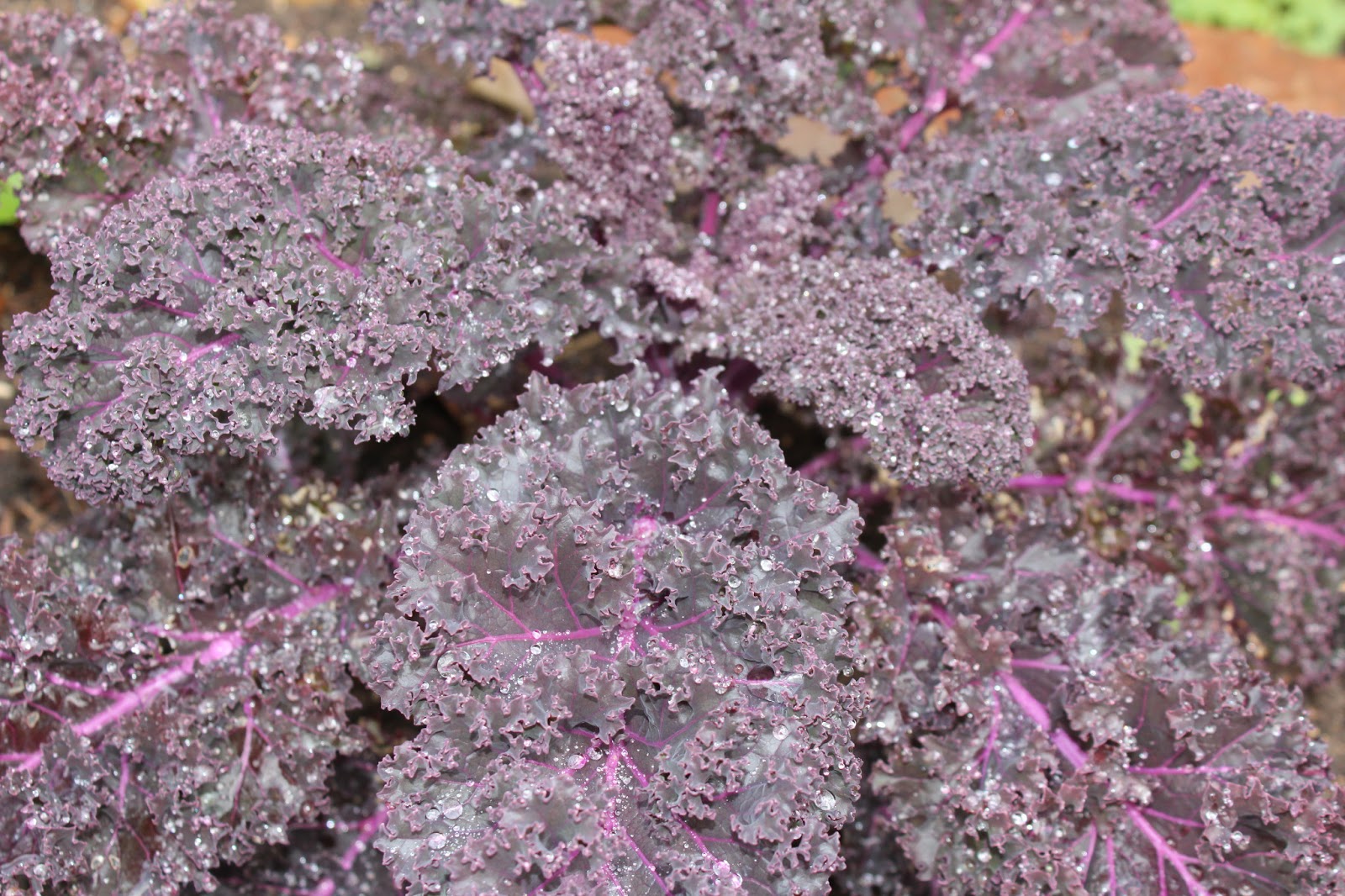
So this week’s substantial rainfall was a welcome drench for plants and animals.  And of course, I had to go out into the garden to record the effect of the rain on my plants.

Don’t step in the puddles as you tour the garden.

How much rain have you gotten lately in your garden?

By |2016-04-14T02:39:32-05:00January 12th, 2013|Blog, drought, rain, rainfall, Sharing Nature's Garden|0 Comments

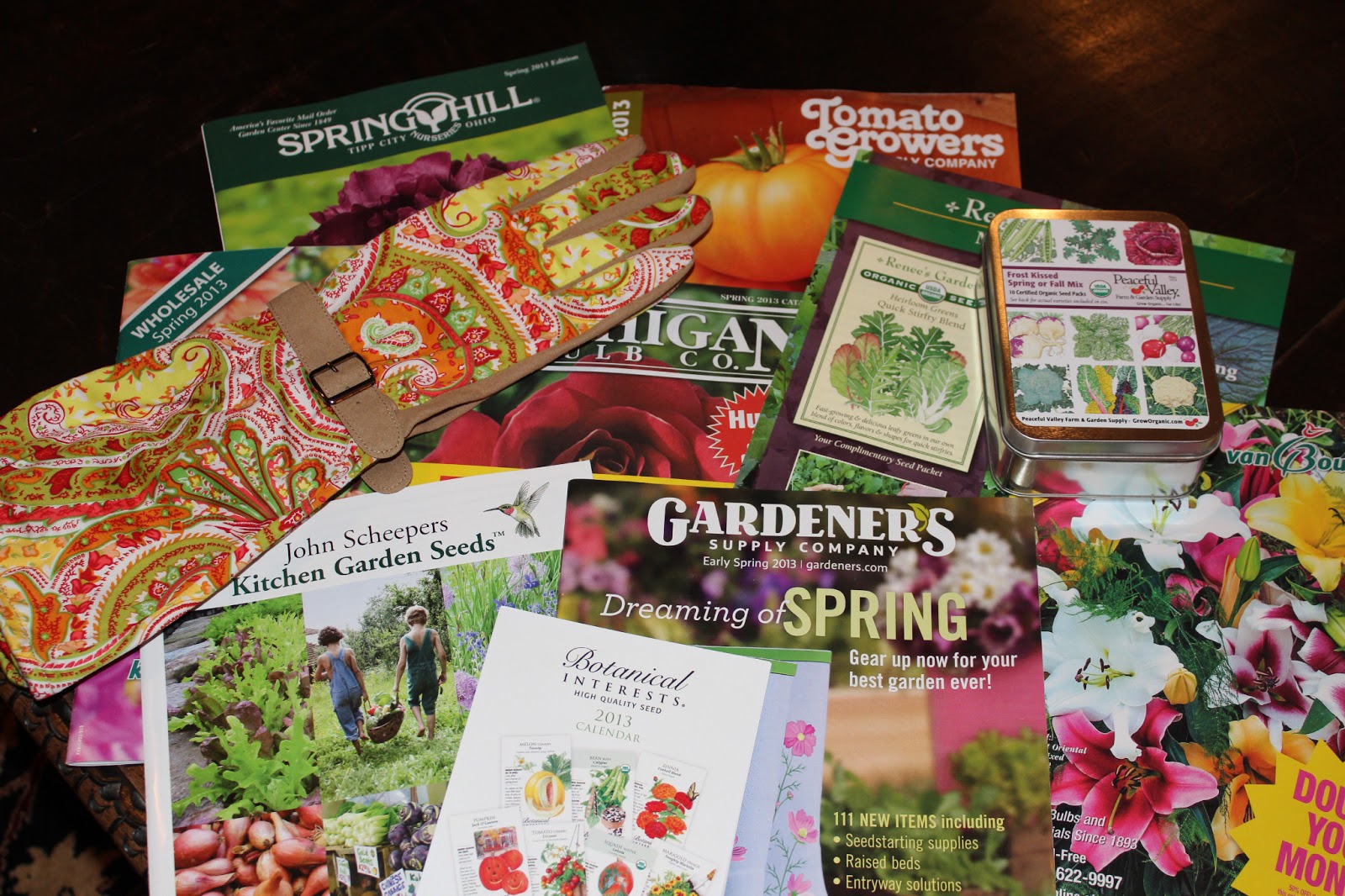
Sweet dreams of seeds to come from gardening catalogs…

We’re having our long winter’s nap here in Central Texas.  I can’t really call it cold here, but it is time for a break in the garden.

And that means…seed catalogs.

They’ve started arriving and I’m making a pile for a cold night, curled up in my chair with a cup of hot tea and a roaring fire.

Never mind that I already have a collection of seed packets large enough to start my own seed catalog, there are new varieties out there that are calling my name.  Seeds that are faster to germinate, bolt slower, have sweeter fruit, are more drought tolerant, produce more vegetables, flowers, you name it. 

If it’s new, a gardener’s gotta have it, right?

Right now, broccoli, cabbage, kale, strawberries, chard, lettuce, leeks, parsley, cilantro, and onions are taking up most of the veggie garden space.  But I’ve always got room for bulbs and cutting flowers (I think!).

Room or not, there are seeds in my future — are there seeds in your future?

Garden resolutions 2013

I’ve long given up New Year’s Resolutions — but I do make some to-do lists.  If I call them to-do lists, I seem to get around to them better!

This year I have a long garden to-do list.  Perhaps committing it to eternal, world-wide view on my blog will help me check things off my list!

So, here goes:

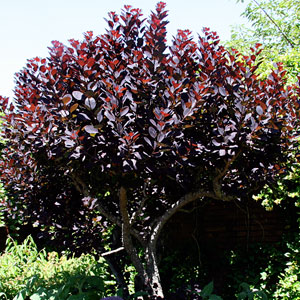
 1.  Plant more trees outside the back fence in front of scrubby cedars.  I love this smoke tree and planted one for a client this fall, wishing all the while that I had one to enjoy. 

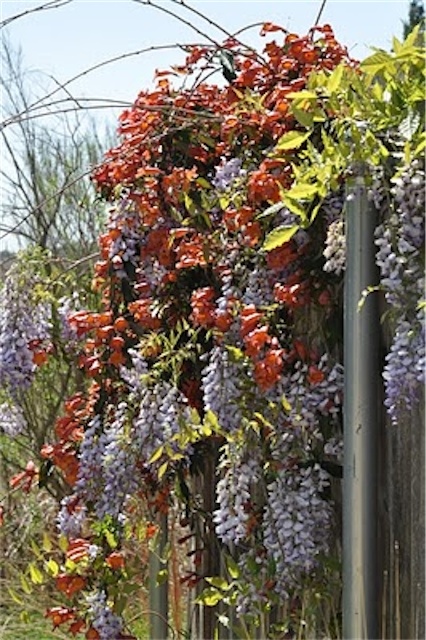
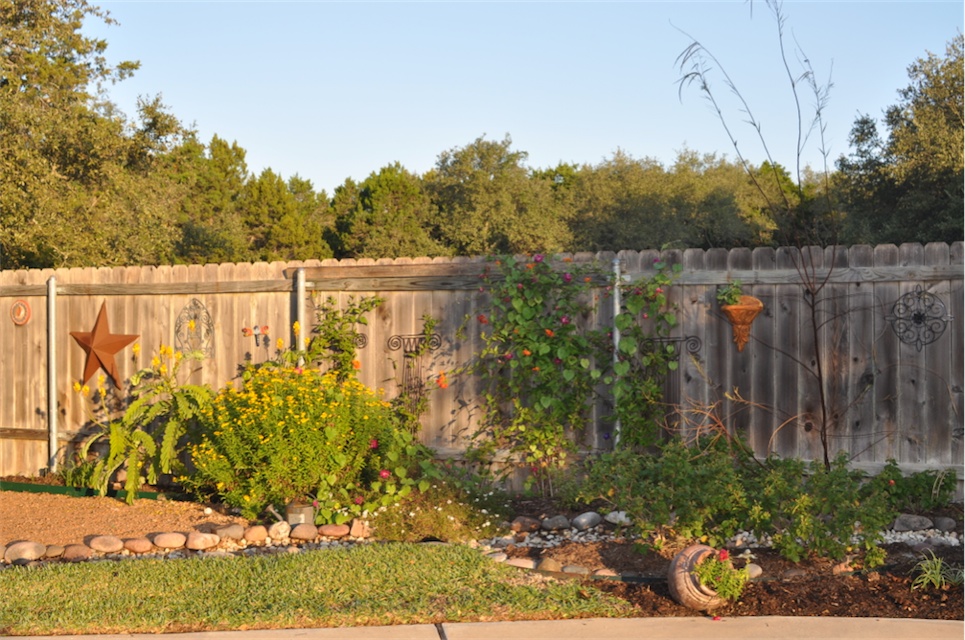
 2.  Have an a corner arbor build to showcase my tangerine cross vine and my wisteria.  The cross vine winds along the fence and then climbs  20 feet up into a tree where I can’t see it.  The wisteria spends most of its time hanging out on the opposite side of the fence — hiding from me — to be closer to the morning sun.  A tall arbor would give them both plenty of room to keep growing — growing where I can enjoy them!

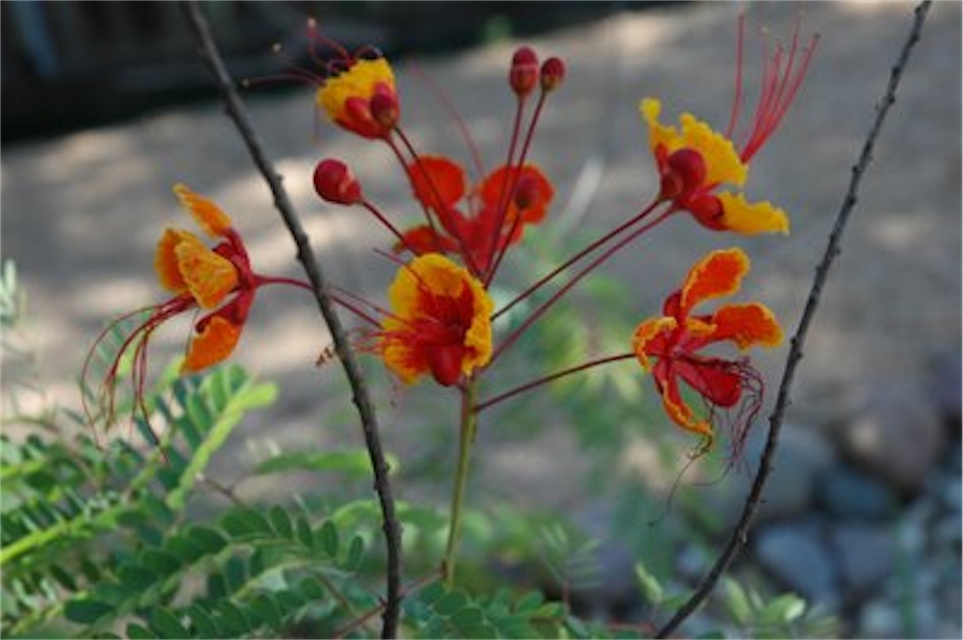
 3.  Replace the pride of Barbados that I lost over the last two winters.  I love the explosion of color these trees bring in the late summer and I’ve missed mine.  I vow to find some great hot spots for them to thrive.

4.  I will buy more bigger starter plants this year.  I’ve bemoaned the fact that my newer plants struggled to come back from harsh winters and scalding summers.  Some years they even came back smaller than when I planted them!  When I can, I want to invest in more established plants.

 5.  With too much on my plate, blogging and scrapbooking have waited in the wings too much this year.  I love those creative outlets and want to give myself more opportunities for gathering inspiration from them.

 6.  Divide, divide, divide.  I have irises, bi-color irises and lilies that really need dividing.  In fact, they needed dividing this fall.  This will be the year of dividing, replanting and sharing.

 7.  Prune, prune, prune.  My cottage garden, cutting garden and hot southwest garden all suffered from overgrown-itis this year.  Yes, the plants were all beautiful, but I know that pruned properly they would have complemented each other and showcased their individual characteristics better.

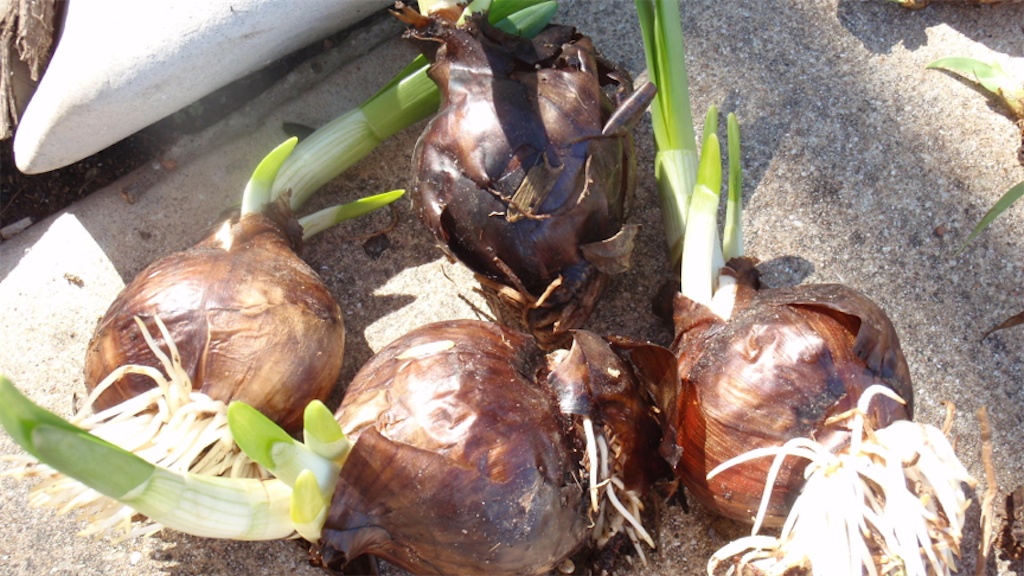
 8.  This year I will plant my bulbs before January … oh, wait … that means today!  Yikes – better go find them and get to planting!

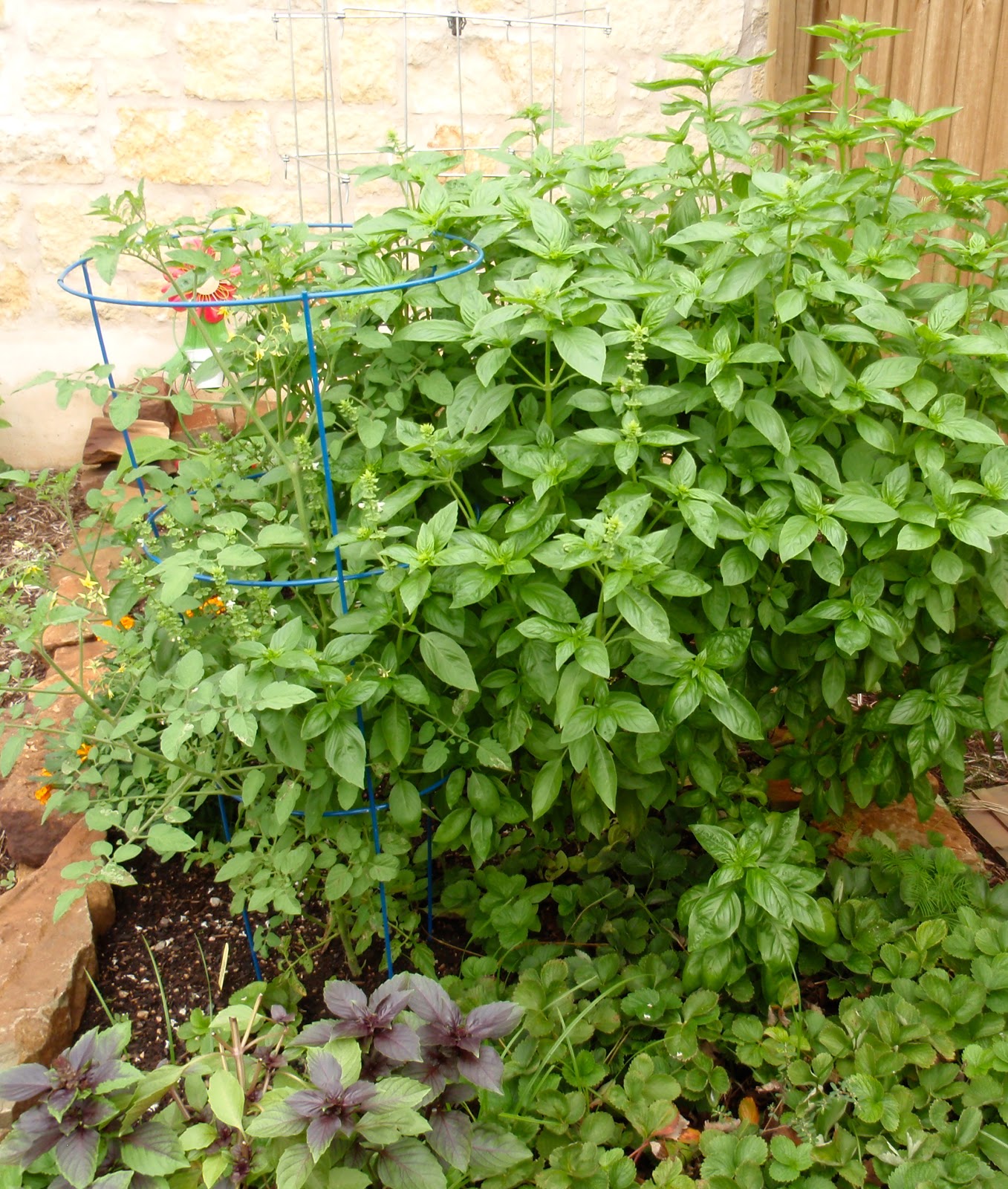
 9.  I WILL make homemade pesto from my basil “trees” this year.  I say that every year when my basil gets out of hand — I mean stunning — but this year I really mean it.

10.  And last, well, there never is a last, but I plan to dig up most of this and rebuild the dry creek with moss rock and other, larger stones.  The recycled glass will come out and I will raise up the bed to help plants thrive there.  With very little soil and a berm to avoid soil on the fence, the plants don’t get enough water and the soil just isn’t deep enough.  The solution — protect the fence from rotting by putting hardy board against it and rock in the front to add good soil.

That’s the list — for now.  As with everything in gardening – it’s organic and will change a thousand times over the next year.  But it’s a good start and I feel good about making decisions to tackle some of my current and perpetual problems.

Guess we’ll see where I end up this time next year.

What’s on your garden resolution list for 2013?

A must-read for gardeners and wannabes: The Layered Garden

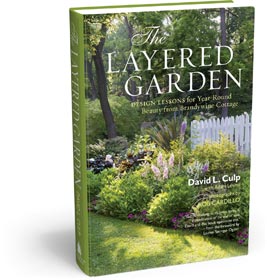
In my spare time, I’ve been devouring the The Layered Garden, by David Culp with Adam Levine.  The title jumped out at me when I got the latest email promotion from Timber Press, so they sent me a copy and I’m reviewing it.

As part of their fall promotion, Timber Press is giving away an amazing deal – 5 books, a tote bag and a signed print by Brooke Weeber.  Just go to Timber Press to enter and win. 

All the books look great, but an entire book on layering in the garden, the history of David Culp’s garden and then, the icing on the cake, Rob Cardillo’s photographs — well, I just couldn’t resist.  And I’m glad I didn’t.

The Layered Garden is an inspiration for experienced and new gardeners alike.  Filled to the brim with beautiful photographs — especially long shots with detailed design components — it offers a full pallet of ideas.

The book chronicles the creation of the gardens of David Culp and his partner, Michael Alderfer, at Brandywine Cottage in Pennsylvania.  Purchased in 1990, the cottage itself was built in the 1790’s and the original farmland subdivided into 2-acre lots.

Both a garden designer and a plant collector, Culp writes, “I express myself in two distinct ways: as a plantsman who enjoys collecting specimens…and as a designer who enjoys playing with plants to achieve a desired effect.”

The first section of the book weaves the tale of each of the distinct gardens and how they came to be so lush and full.  The gardens are designed to be layered in many ways — layers of sizes and textures and colors and layers that peak at different times of year, allowing different waves of bloom.  Other elements like pots and antique stone troughs add interest and more layers, and they plant them with seasonal accents and plant displays.

The garden includes layers of tall plants and man-made elements to provide vertical interest in the garden. 

Then I got to the third chapter of the book, “Signature Plants Through the Seasons,” where he admits, “Hello, my name is David, and I am addicted to plants.”  That really spoke to me!  Full of beautiful photos and detailed information about the focal point plants of each season, his collector’s passion is evident here.

He closes with a list of his favorite garden books, which I’ll definitely be checking out, too.

Layers and layers of plants and colors and textures — gardens waves of blooms that peak throughout the year — that’s what I want in my garden.  And I’ll be going back to this beautiful book time and time again for inspiration and ideas.

If you’re looking for some inspiration for layers in your garden, check out the Timber Press promotion at Garden Outside the Garden – maybe you can win it! 

Hues of green evoke serenity in Austin garden on Open Days tour

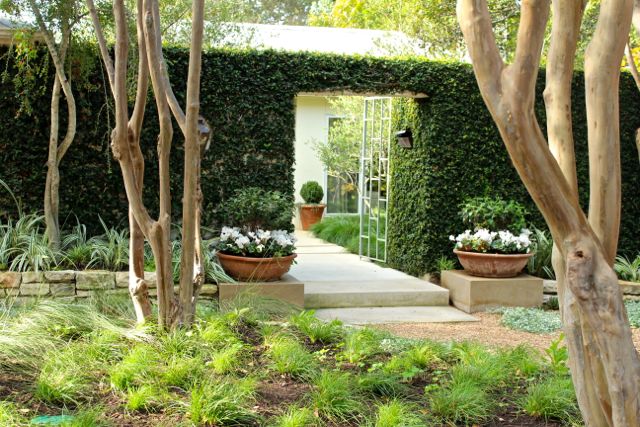
The Yvonne Tocquigny and Tom Fornoff garden, featured on this weekend’s Garden Conservancy’s Open Days Tour,  evokes a sense of serenity as you stroll through its simple combinations of grasses, vines and water features.

Simple yet strategic views draw you into the garden with a series of gates, paths and courtyards.

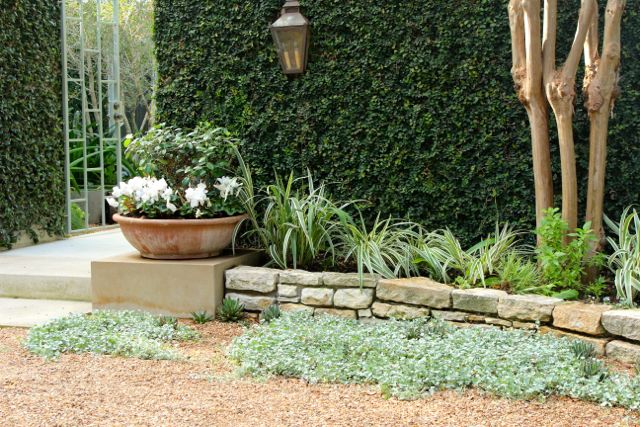
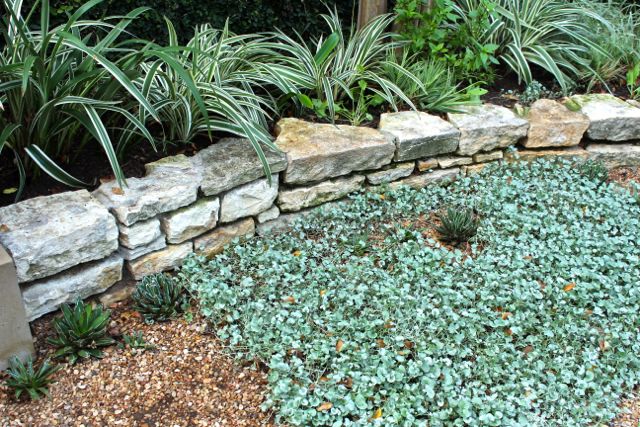
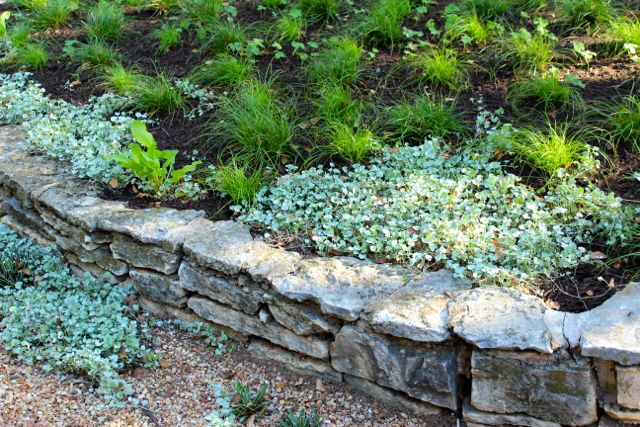
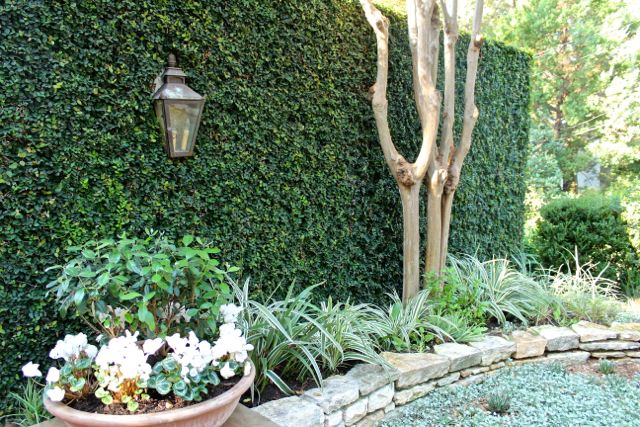
The beautiful gray-green hues of Dichondra, Silver Ponyfoot, create a gentle contrast for the other lime and grass-greens of the garden.

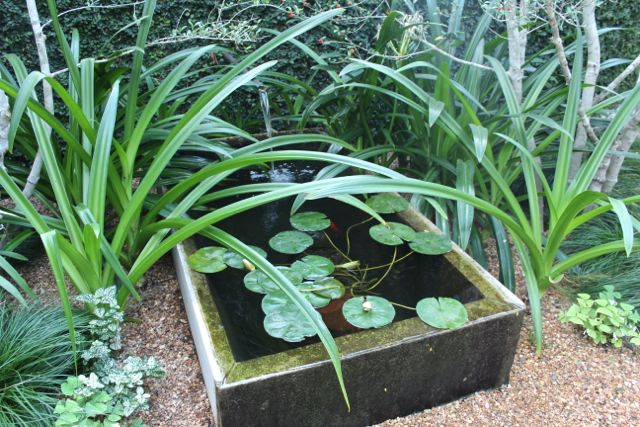
The entry courtyard includes this simple, Zen-like water feature, surrounded by strappy crinum leaves and fine gravel.

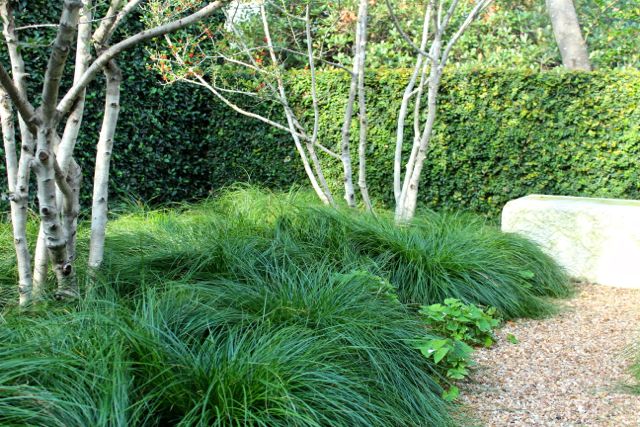
The garden was full of berkley sedge – providing a caress of beautiful texture throughout the vignettes.

 More contrasts with the berkley sedge – younger, smaller plants, and the silver ponyfoot.

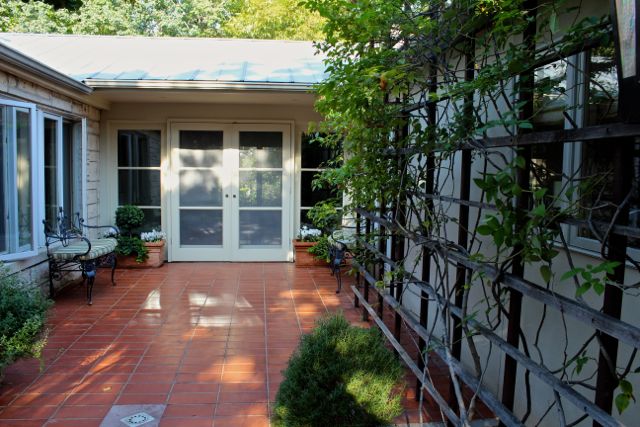
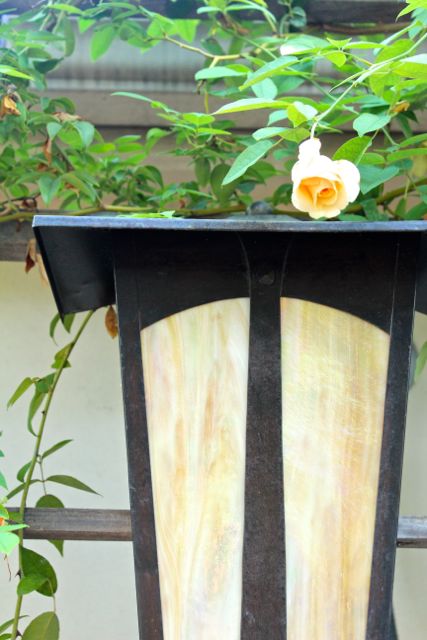
The garden is also full of a variety of trellises – like this metal and wood one, set out 8-10 inches from the wall.  It supports the rosebush, but it’s also an artistic focal point on its own.

 Beautiful lanterns were mounted right onto the wood and metal trellis.

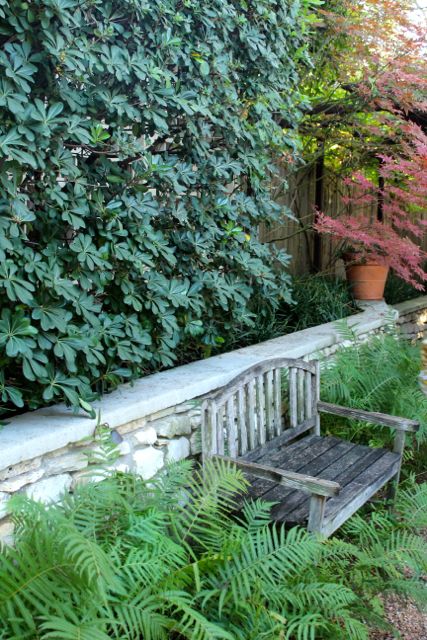
 More contrasts surround this inviting bench — both in textures and in hues of green, and a Japanese Maple thrown in for a pop of color.

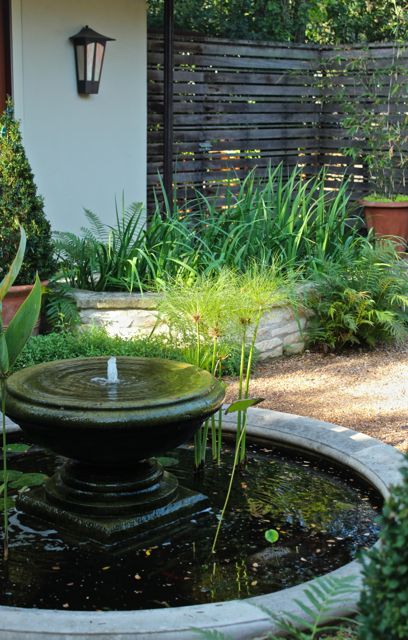
 The water feature in the back courtyard has an old-world charm, and is surrounded by simple plantings of t=ferns and irises and papyrus.  Ferns also dot the decomposed granite pathway, growing up out of the ground at our feet.

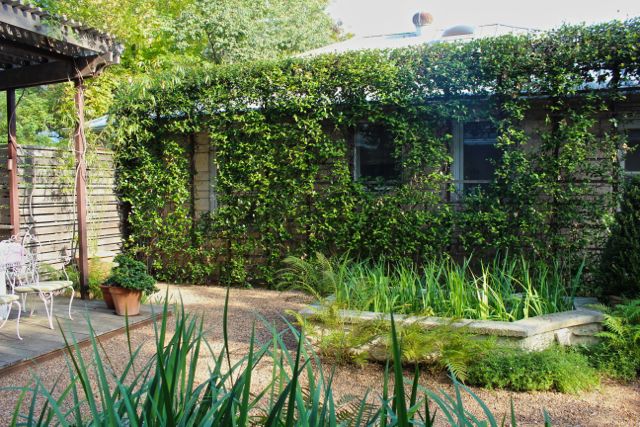
Another trellis creates a wall of plant art to add to the sculpture of the courtyard.

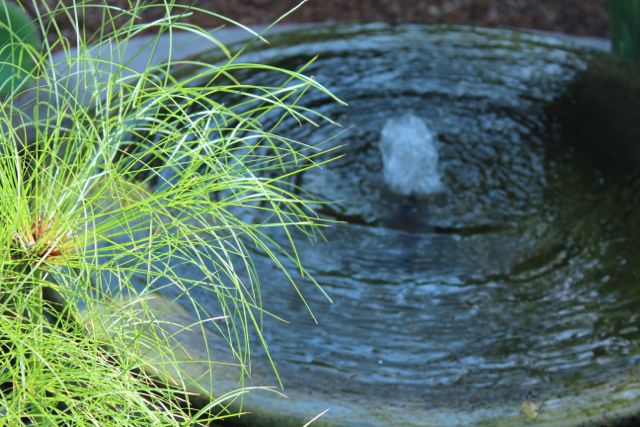
Peering into the fountain through the fronds of the papyrus creates another combination of contrasting hues of green.
This was a beautiful and intentional garden – complex, even in its simplicity – a peaceful place to while away the hours. 
Go to Top