

Simple steps to delicious container veggies at home
We are all craving back-to-basics outdoor time right now. Early concerns about food lit a fire under many of us to grow our own fruits and veggies at home. But what if you’ve never grown food before?
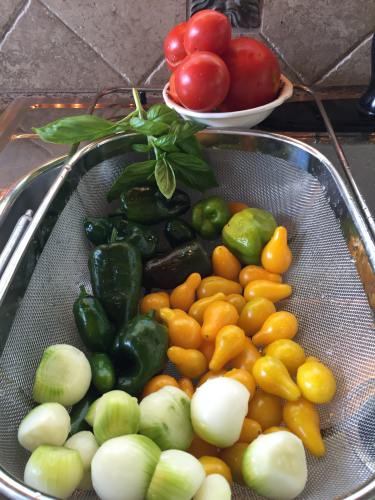 Many would-be vegetable gardeners are thwarted by a lack of experience or space, impenetrable rocky soil or clay, or a shortage of sunshine. With limited space on a balcony or patio, too much shade or landscape conditions that aren’t conducive to vegetable gardening, what’s a wannabe green thumb to do?
The burgeoning gardening movement and the increasing national interest in growing vegetables at home has fueled the creation of many alternatives to a patch of rich soil in the ground.
Alternative growing containers are the latest trend, making vegetable gardening simpler than ever. To go along with the increasing desire for small space alternatives, there are also more container-sized vegetable varieties now than ever before.
Most vegetables can be grown in a whole host of containers. From boring plastic pots to specially designed grow bags, it’s never been easier to get started. 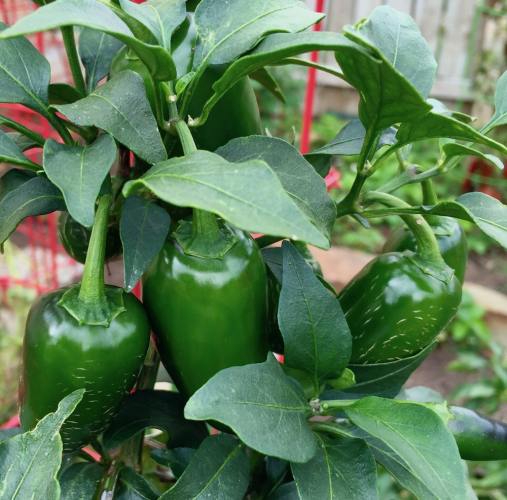 There are many other container options for inexpensive and moveable mini-gardens, too. Consider large 5-gallon plastic buckets, leftover from house projects. Other options include wooden barrels, galvanized tubs, even bushel baskets. Just make sure the container has adequate drainage by poking holes in the bottom. And, if you’d rather not look at a white plastic pickle bucket housing your tomatoes, you can spray paint your container to match any garden decor. Make sure the container is safe, and not treated in any way with toxic materials.
Don’t forget about vertical spaces. Hanging baskets can be used for lightweight greens and herbs and some fruits or vegetables will even grow in upside-down hanging planters. Train your vining vegetables up on poles, supports or trellises as much as possible, using the vertical space in your garden as well as the ground. Large plants like tomatoes will also need tomato cages in the pots to give them the support they need.
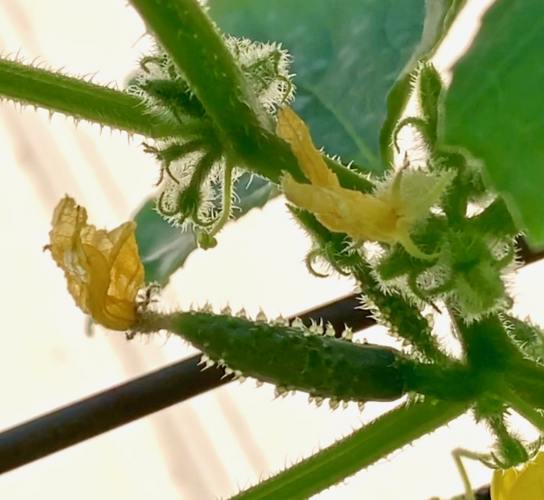 Use the right size planter. Smaller containers work for herbs, but for veggies, make sure your pot is big enough and has drainage holes in the bottom. One of the most important things you can do to ensure success is to use a big enough container—the bigger, the better. For one indeterminate tomato plant, for example, you need a container that is at least 1 square foot, but 2 square feet is better. Five-gallon buckets (with holes drilled) are the perfect size for one plant.
Be sure to use a lightweight potting soil. Choose a mix designed specifically for pots that will help it drain properly. Do not use topsoil or garden soil.
Keep a close eye on the moisture needs of the plant – remember, containers dry out faster than soil in the ground. 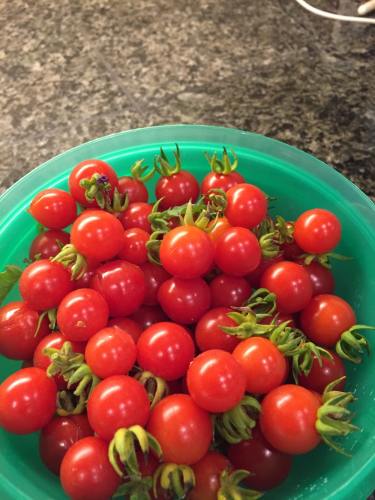 Be sure to water regularly to keep plants happy and healthy. Keeping your containers near a water source will make regular watering easier.
Check out your sunlight. Most veggies need between 6-8 hours of sunlight. If you have lots of shade, containers are great because you can move them around the maximize sun exposure.
Make sure you give your plant the right nutrients—nitrogen, phosphorus, and potassium—all essential for container growing. Some potting soils come with fertilizing nutrients in them. If your bag doesn’t, buy all-purpose slow-release fertilizer or a tomato/veggie-specific fertilizer and follow the directions on the bag.
Happy Gardening.
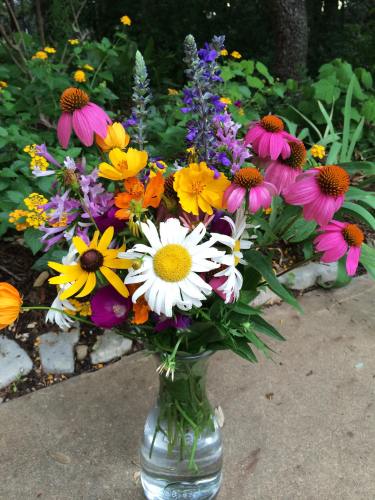
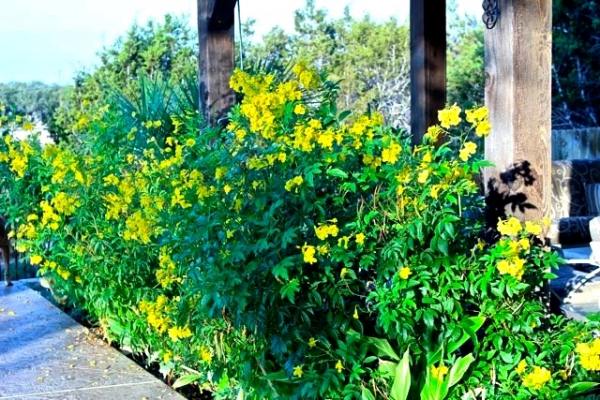
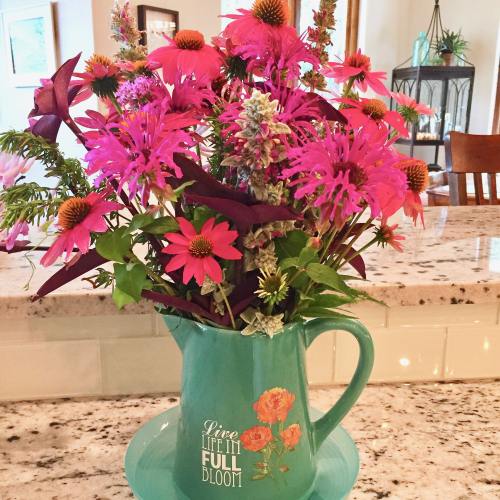
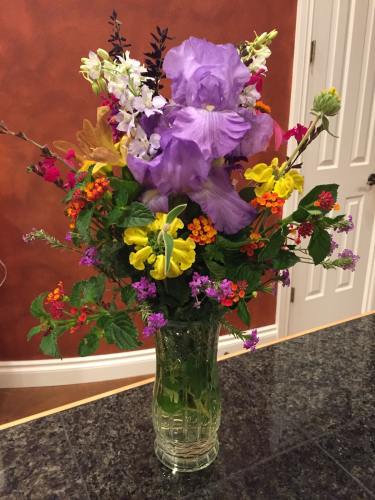 Almost anything in your garden can be worked into a bouquet. Now that you’ve identified some of your own pretty garden flowers that you’d like to put into a vase, how do you start?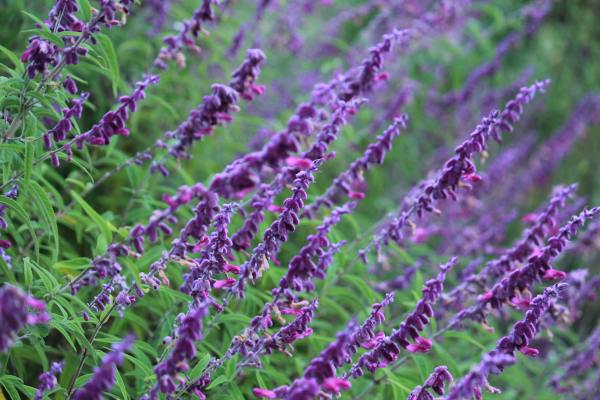
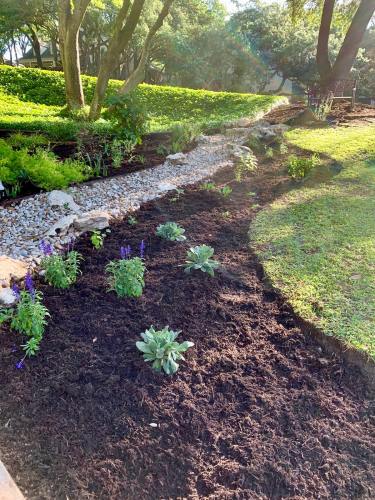
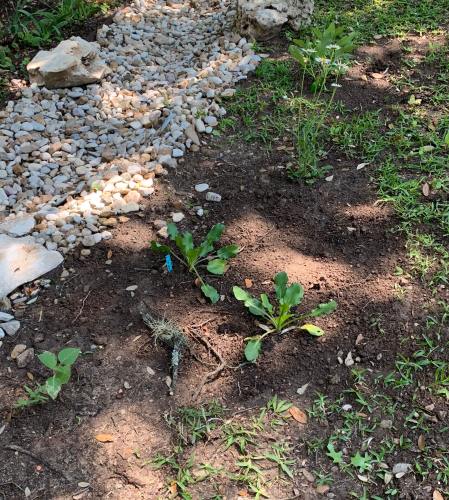 Having filled the new beds that I created along the dry creek, I decided I needed some more plants.
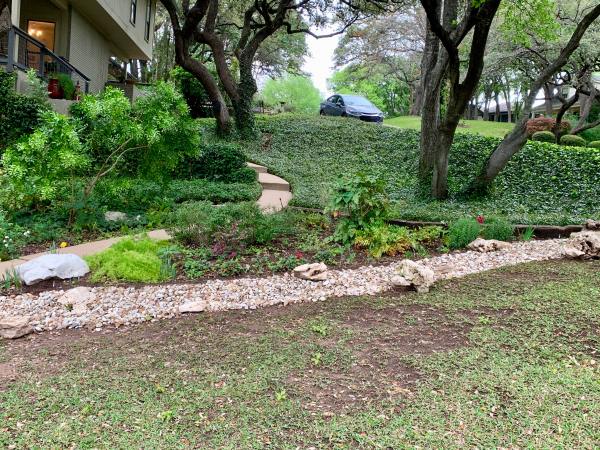 Here’s the before photo. When we moved in, there was little to no grass because of dense shade of over gown trees.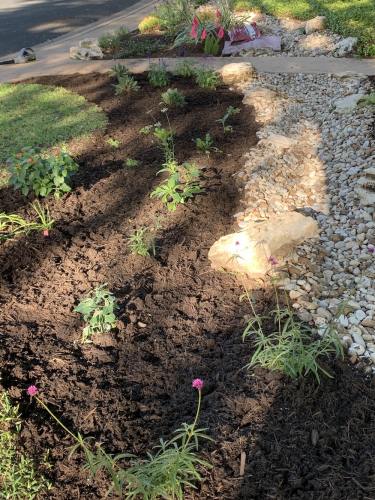
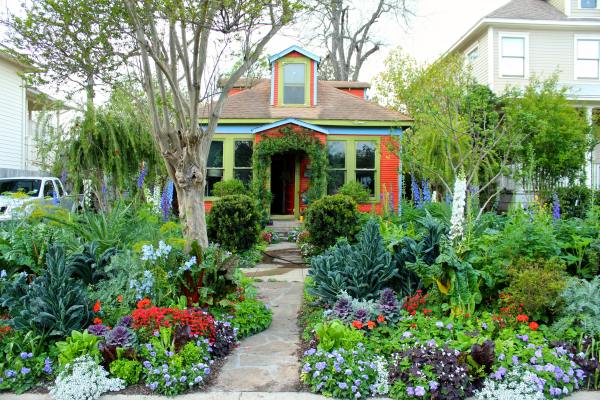
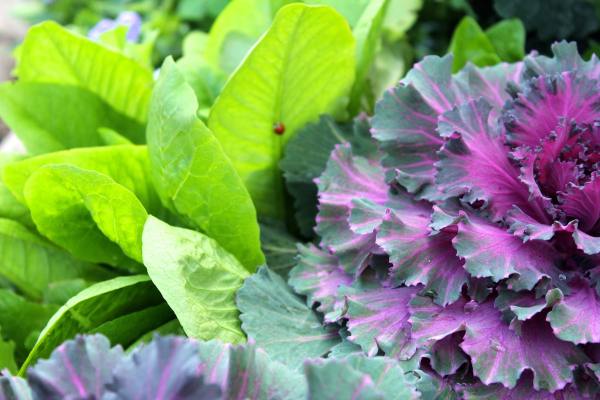
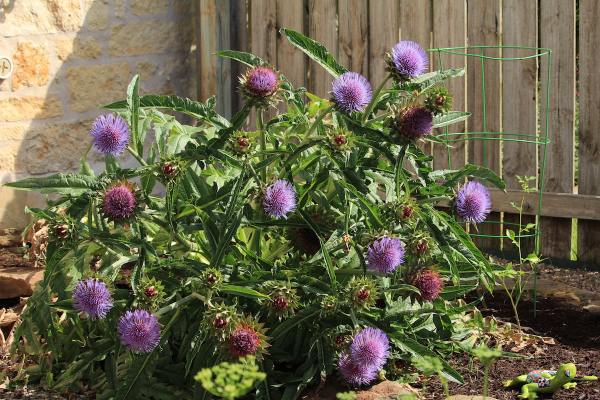 Many edibles also provide interesting contrast by adding unique texture and form into the mix. Artichokes, with their large, spiky leaves and brilliant lavender thistle-like blooms make stunning sculptural focal points. Thick-veined and curly greens stand out when planted next to smaller, softer border plants like zexmenia, purple skullcap or damianita. Feathery dill plants give the garden a wispy element to include next to woody perennials.
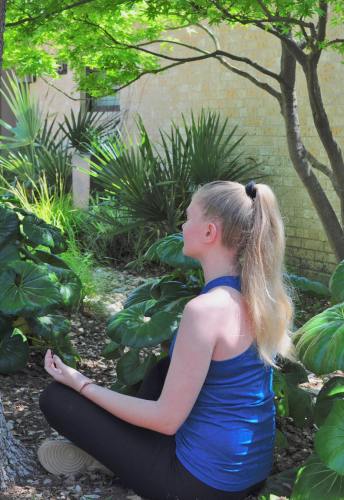 There’s a lot going on right now, and I’m sure you’re looking for some stress relief, escape, and distraction. Luckily, you only need to look as far as your yard for a place to meditate, exercise, and get your hands in some healing dirt. Studies demonstrate that spending time in a garden can improve our well-being – both physically and mentally.
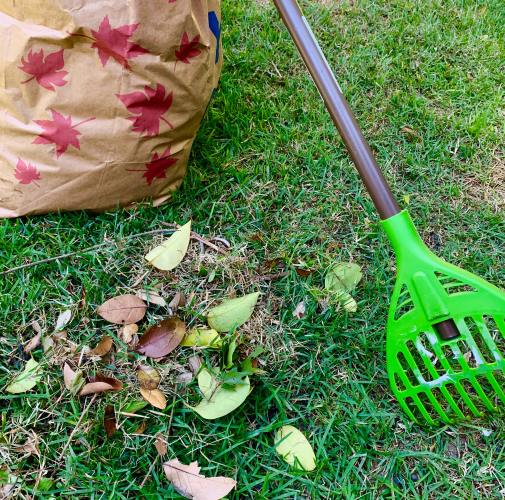 Design your own garden workout routine at home. Gardening chores are excellent exercises and offer anything from soothing stretches to serious cardio. Did you know raking leaves for 30 minutes burns 225 calories – and provides weight training and tones all the major muscles groups in your body. Choose your chore, from raking, pruning, digging or hauling bags of mulch.
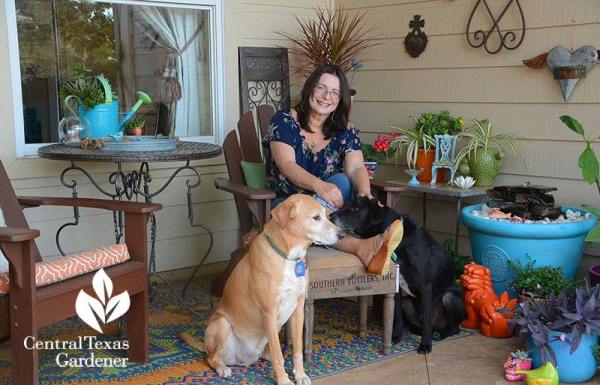 Make a plate and eat your lunch outside and listen to the birds.