

Vision and creating a new garden or landscape bed
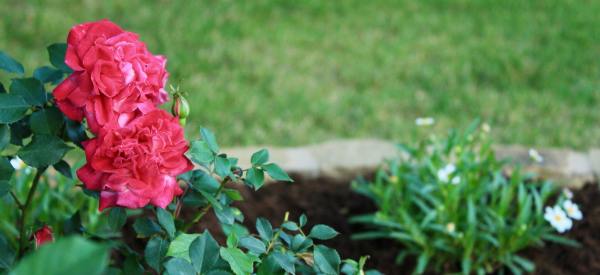 Starting a new garden is scary. There. I said it. Whether you’re gardening in a completely different space, creating a new bed, or just revamping what you’ve got, it can be daunting.
All sorts of things clutter up my brain. What’s the soil like here? Will there really be enough sun in that spot? What if I change my mind later or come up with a better plan?
Realistically, these are all the questions any time we go into the garden, aren’t they?
I’ve given myself some time to sit in this new space, observe it, think long and hard about what I really want and what will bring me joy. (Thank you, Marie Kondo!) I wanted new beds immediately. But creating new beds is an investment and I didn’t want to be rash and then regret my choices later.
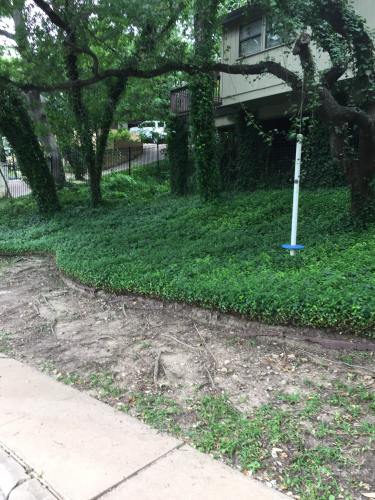
I made lists of plants I love – shade plants, sun plants – evergreens, perennials, annuals, bulbs. NO vines! Never again.
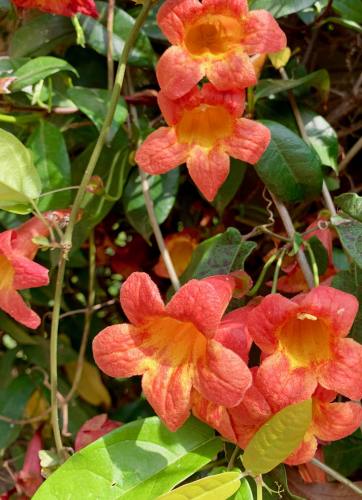
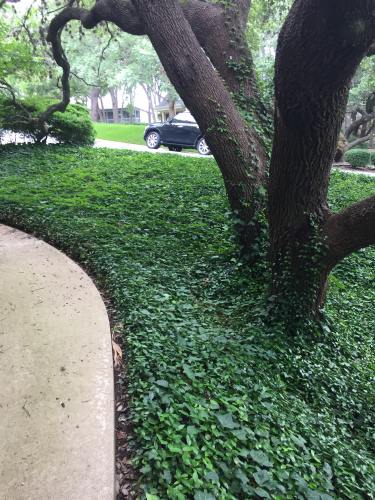
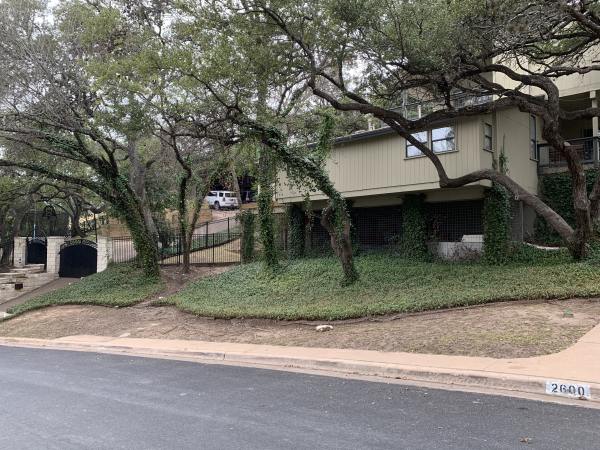
Go back through a few posts and you’ll see that our current yard, trees and house are being eaten by not just ivy, but Asian Jasmine, English ivy, Virginia creeper and trumpet vine. And what wasn’t covered in vines, was eroding and lifeless.
Grass originally lived in this area, but the overgrown trees reached across the street and made this full shade spot too dark for healthy grass.
Following my own consulting/design advice, I started by evaluating my goals. Then I looked at physical/site issues like sun and drainage. I measured and sat down with a piece of paper and a pencil.
I’ve posted pics of the whole new bed, stretching from under a massive oak along a new dry creek and down to the other end of our property.
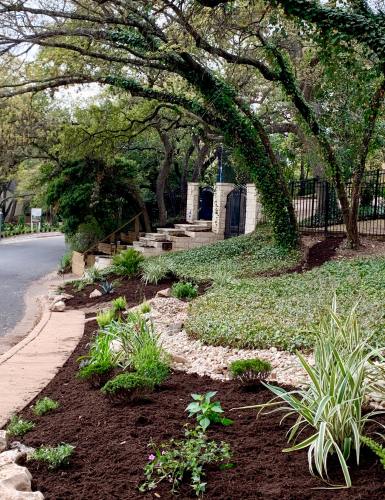
Making my list of most-loved plants, I knew that I wanted a rose. One of the first things we did at the house was prune the lot full of overgrown trees. That gave us some sunshine along the street, and conditions that I hope will be enough for a Maggie rose.
I had two of them behind the pool at the other house. They loved the sun and I loved having them. But it wasn’t the right place for them – I couldn’t ever reach them to prune or care for them. So, I pulled them out. But I missed them.
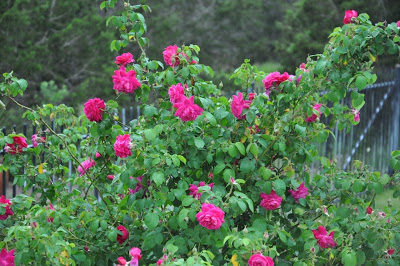
Now I’ve made a special spot for a Maggie in my new garden.
We’ll have to see if she gets enough sun there.
There are some more branches I can prune in the trees directly above if she needs a few more golden rays. I’ll have to see what happens in the summer sun.
For now, she’s small and spindly. I ordered her from the Antique Rose Emporium in Brenham, so I know she’s a healthy plant. She has some buds and I’m babying her for now. With the backdrop of a Mediterranean fan palm, variegated dianella and some neighboring trailing white lantana, I think she’ll be very happy there.
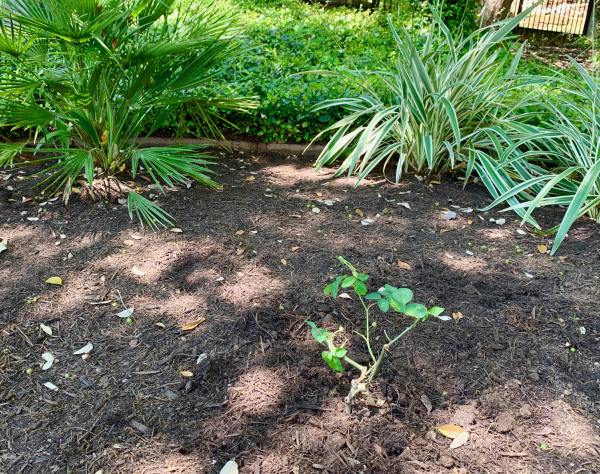
And I’m happy to have her.
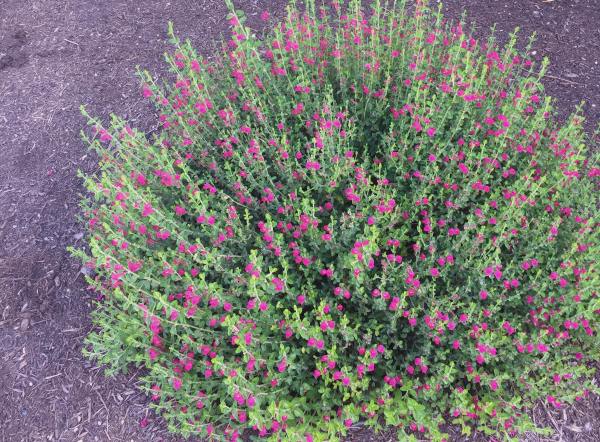
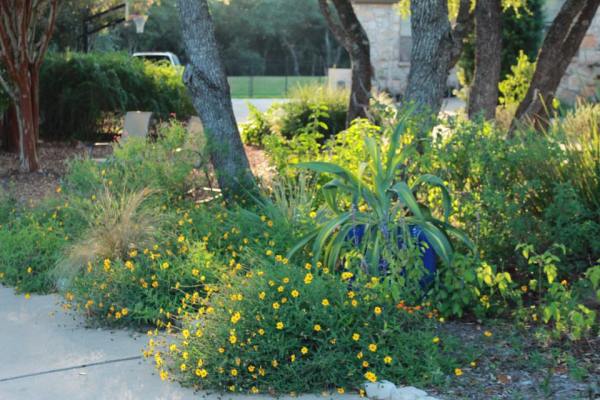 Plants grow, and some of them grow a lot once they’re out of that tiny pot you bought and nestled in your lovely garden. Planting too close together creates more work later as you struggle to prune all the time or are forced to remove plants to allow enough space for them all to thrive. Believe nursery tags and nursery staff and follow the guidelines in your research.
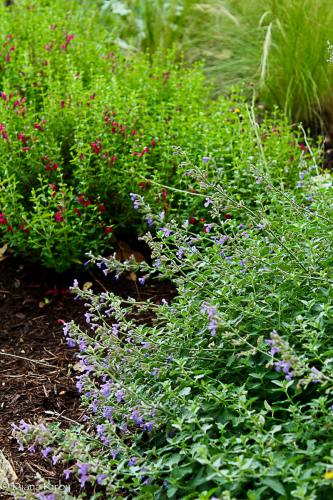 The plants in the front of your layered beds will be ground covers or border plants. For most gardens, these plants typically don’t get much bigger than about 18” tall. There are, of course, exceptions, depending on the overall scope and proportion of the landscape, whether it’s a very small space or a sizeable piece of property. The true test is how they will look in comparison to the next line or area of plants behind them in the bed. Border plants should provide a contrast in size between layers and should look good together, combining different colors, textures and shapes.
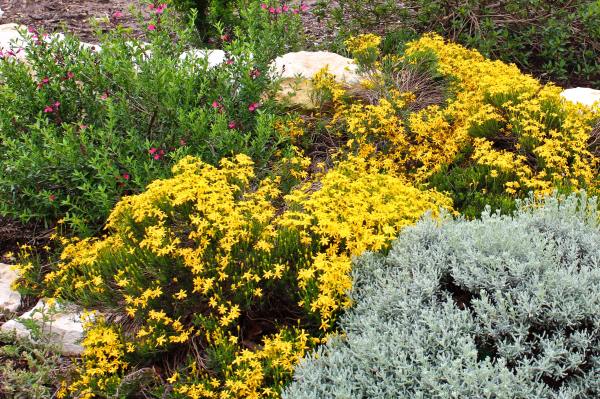 The terms full sun, full shade, part sun, part shade are associated with specific amounts. Full sun means a site gets at least 6 full hours of sun most days. But, here in Central Texas, some plants labeled full sun may still struggle if that’s all blistering afternoon sun. Do your research to determine if there are any limits on tolerance that might apply.
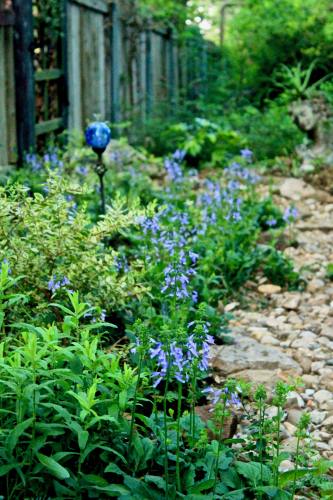 Full shade doesn’t mean no sun at all. Labels calling for full shade conditions refer to less than 3 hours of sunlight each day, and filtered light the remainder of the day. In the Austin area, those 3 hours simply cannot fully expose plants in the heat of the day. A little dappled morning light and good afternoon shade is a much better guide for us.
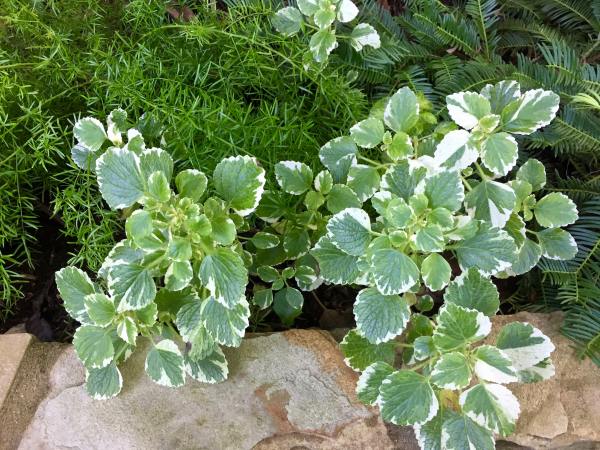 Border plants don’t have to be planted in a straight line. You can also cluster plants in sections according to size, color or texture. Place them in drifts in front of the next section of larger plants based on which ones look best together.
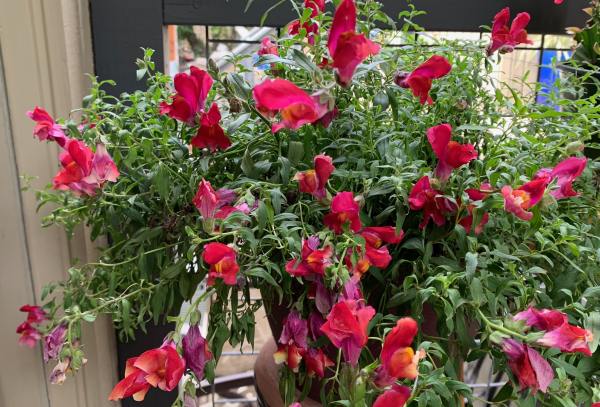
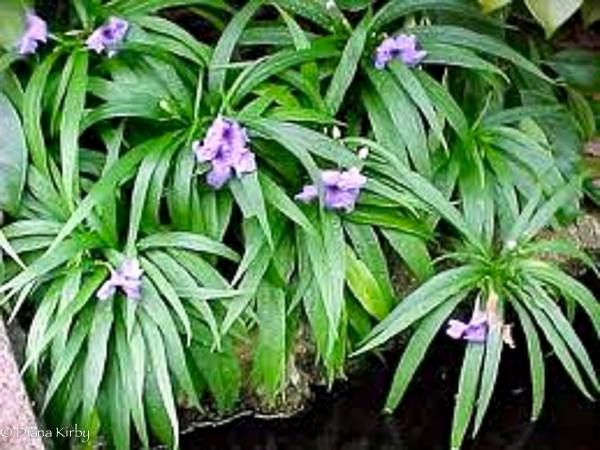 Many annuals also make excellent border plants, adding color and interest at specific times through the year and allowing you to change out your look with the seasons.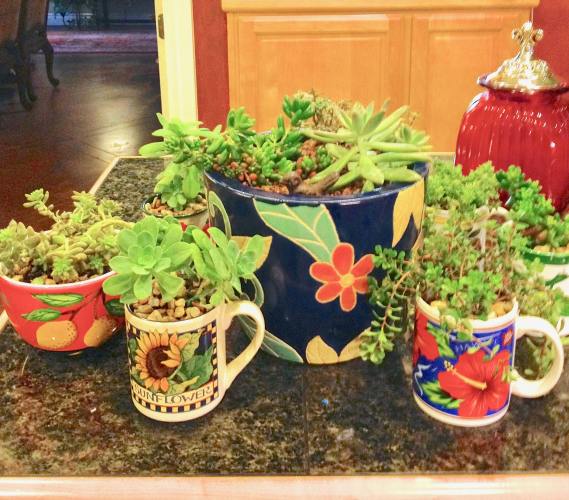
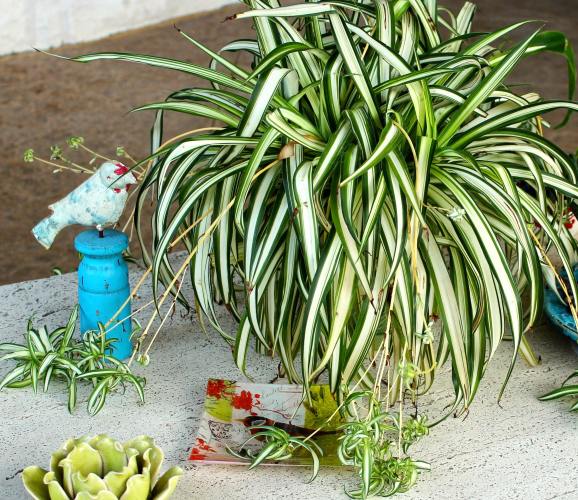
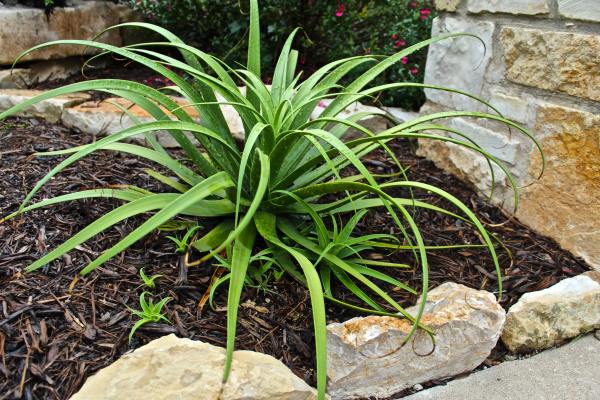
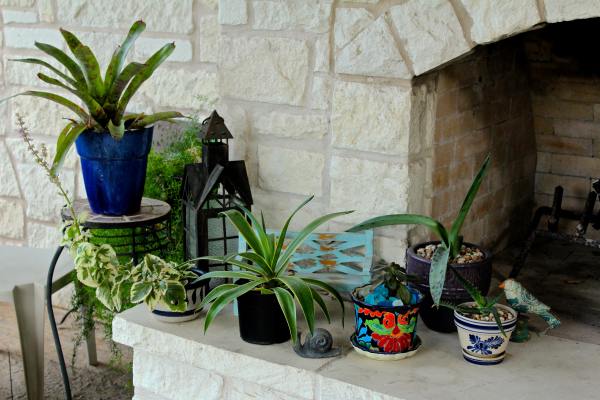
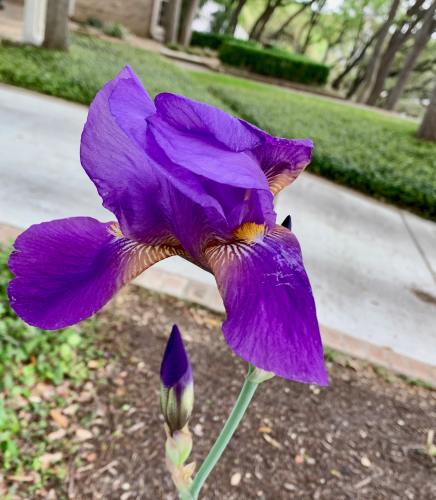
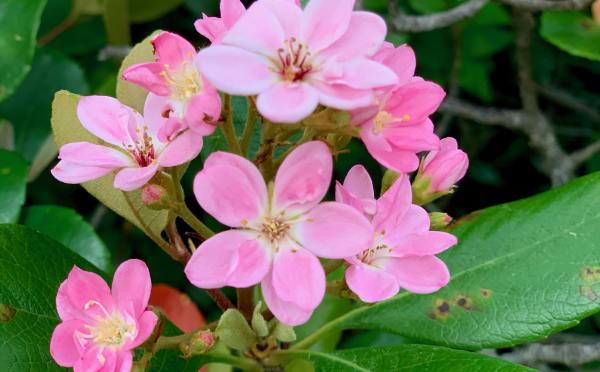
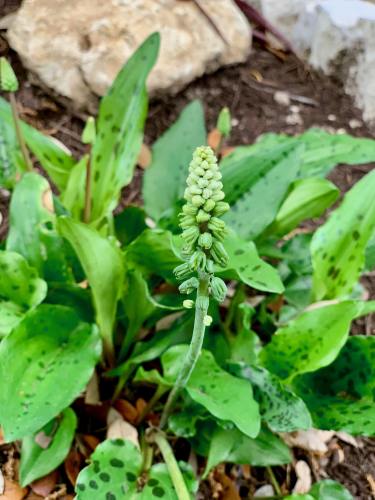
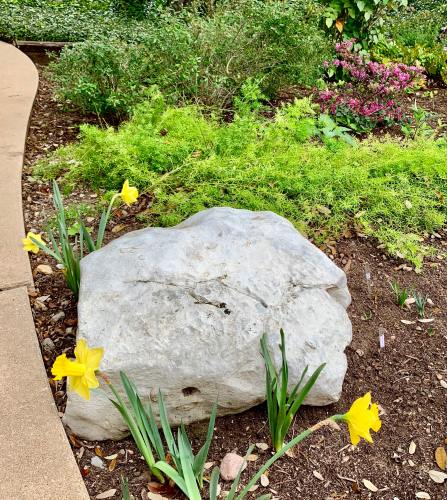
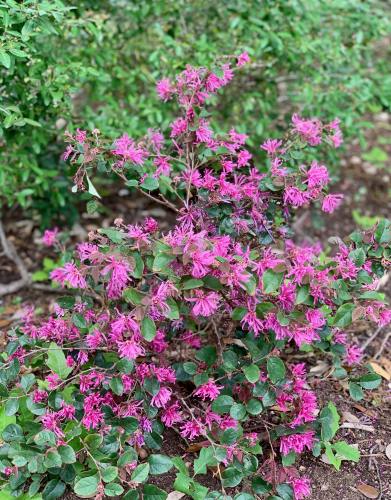
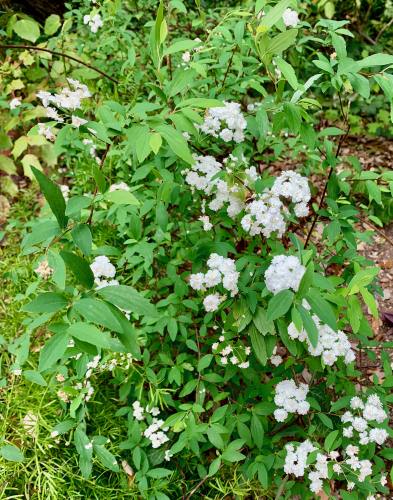
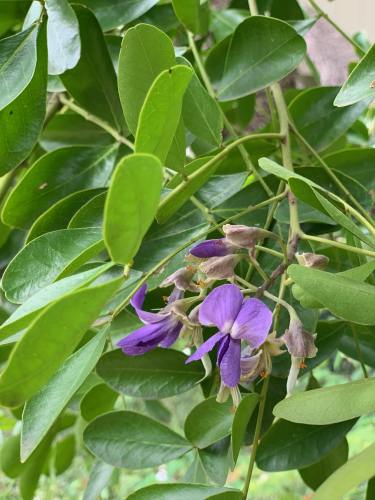
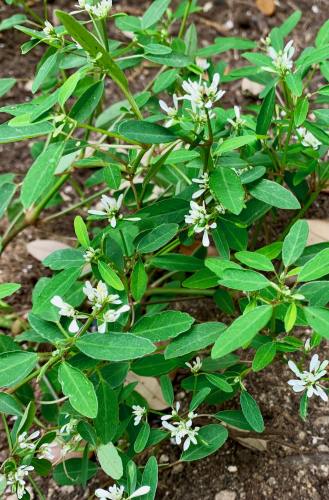
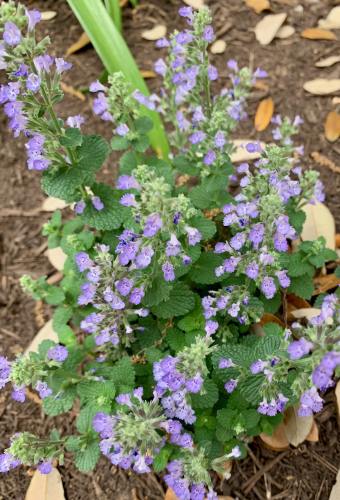
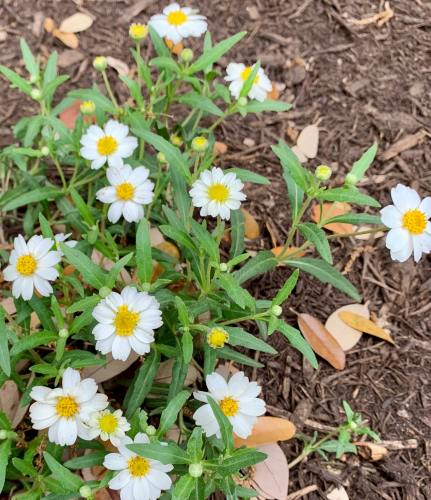
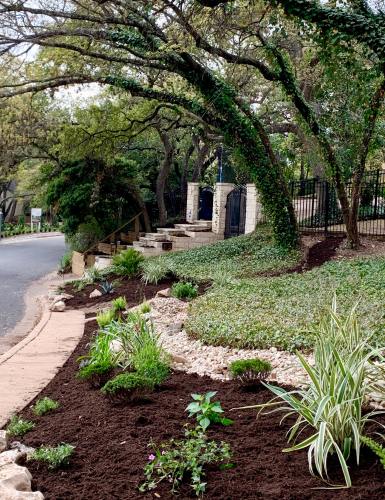
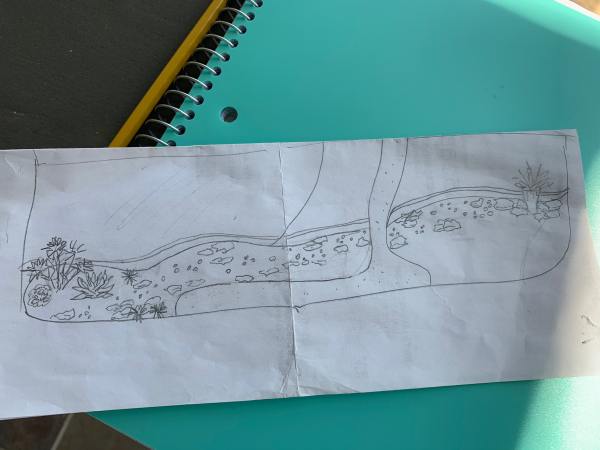 I’ve scribbled on several napkins and I’ve had a few snippets of ideas about possible plant combinations. Luckily, I came to my senses and decided to take the time to assess the space, allow my vision to evolve, and focus on some of my favorite plants. The sketch of plants grew as I decided to intersect the long space with a dry creek, boulders and a large ceramic pot as the focal point.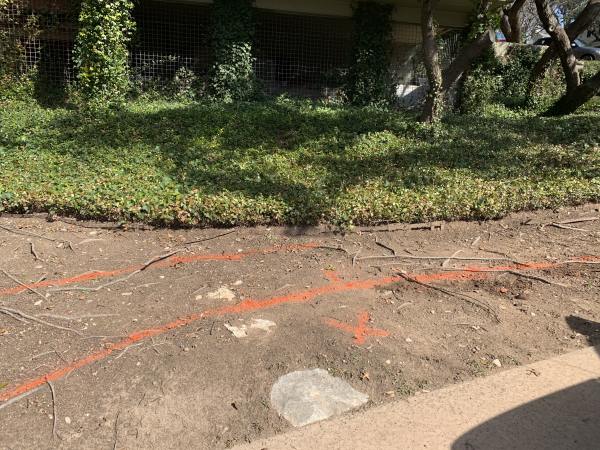
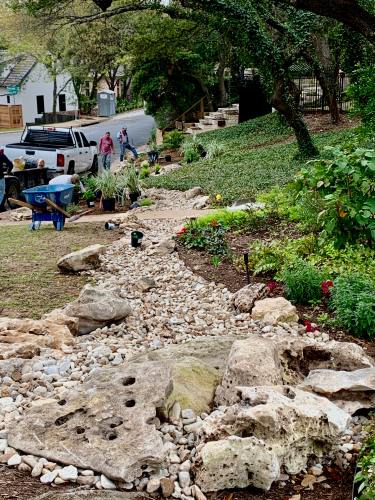
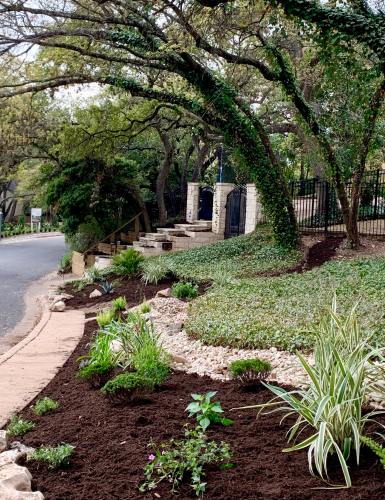
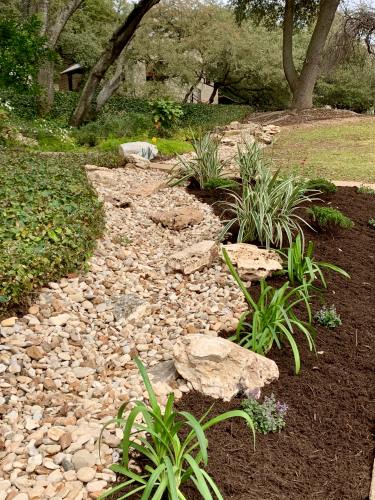 To create year-round interest, catmint is intermingled with the elegant and strappy leaves of Agapathus. I like the textural contrast between the delicate, gray-green catmint and the lime-y foliage of the agapanthus.
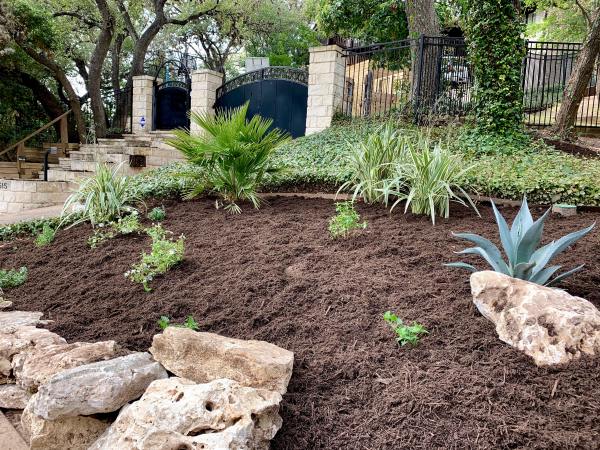 At the other end of the bed and the creek, the shining star will be a deep magenta Maggie rose (which I haven’t found yet). She’ll be flanked by Dianella, a Mediterranean fan palm, trailing white lantana, purple skullcap and a Weberi agave. Just past the Weberi, another Dianella keeps an Indigo spires salvia company along with an artichoke and a scattering of sculptural foxtail ferns.